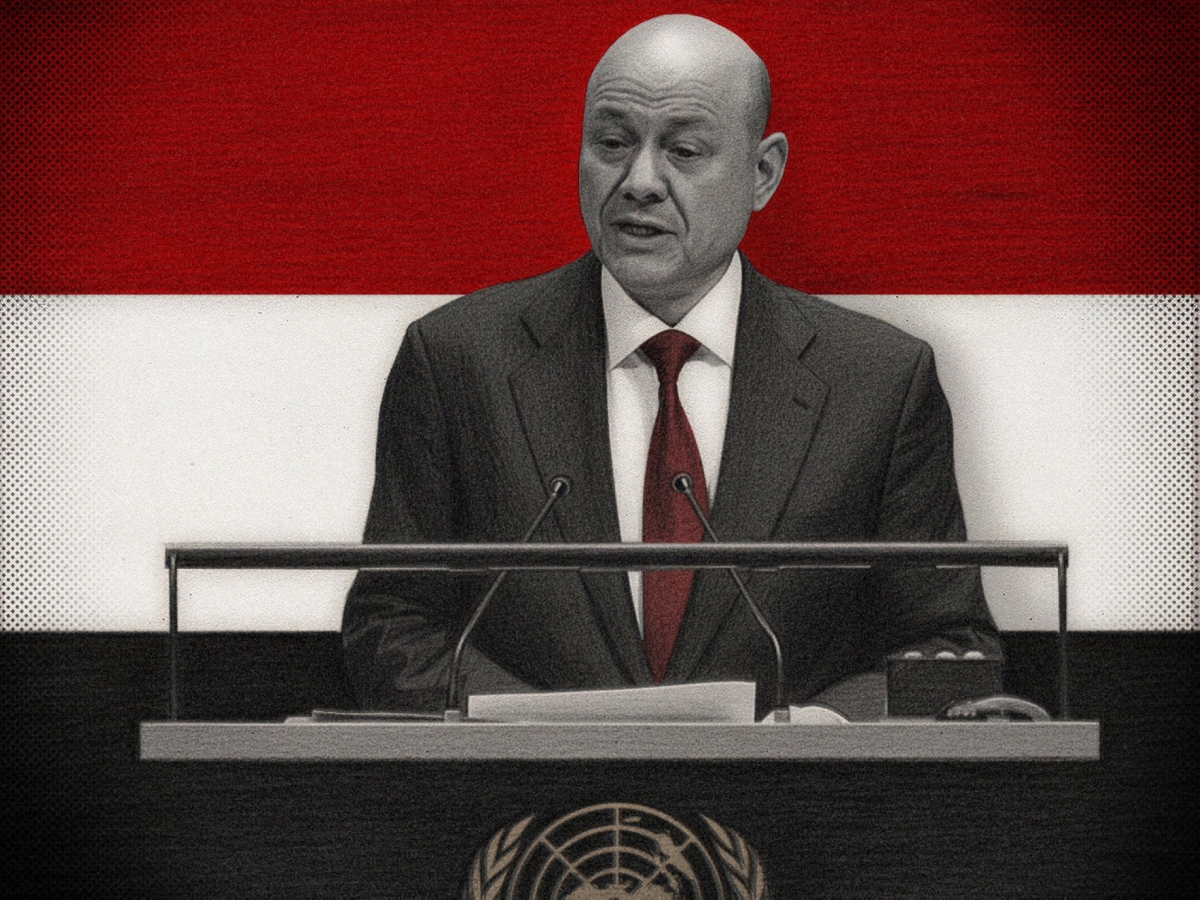
A Man in Crisis … Who Is Rashad Al-Alimi? A Quiet Figure in a Country Accustomed to Leaders with Raised Voices
London – Al Majalla
Last updated: 30 December 2025
Rashad Al-Alimi, whose name is frequently mentioned in the current crisis, was rarely in the news; he is the President of Yemen’s Presidential Leadership Council. Almost a week ago, the Southern Transitional Council forced him to leave Yemen’s interim capital, Aden, at a time when STC forces were attacking the governorates of Hadhramaut and Al-Mahrah.
Al-Alimi has been the highest executive authority and head of state of the Republic of Yemen since 7 April 2022. He stands out as a familiar counter-type: a statesman rather than a populist leader, and a security-administrative figure who prefers managing complexity to breaking it. He operates according to the logic of “preventing the worst” before striving to “achieve the best.”
Where Did He Come From?
Al-Alimi was born in Taiz, one of Yemen’s most politically and culturally sensitive cities. He was graduated from the Police College in Kuwait in 1975, then obtained a Bachelor’s degree in Arts from Sana’a University, followed by a Master’s degree and a PhD from Ain Shams University in Egypt.
He worked as a professor at Sana’a University and joined various sectors of the Ministry of Interior, steadily advancing through state institutions since the 1980s. His professional background is security-administrative. He held key positions, most notably Minister of Interior and Presidential Advisor, which gave him a deep and cultivated understanding of the fragile structure of the Yemeni state—where it holds together and where it fractures.
A Defining Test: Rejecting Saleh’s Alliance with the Houthis and Departing for Saudi Arabia (March 2015)
Unlike many others, Al-Alimi was not the product of a populist moment, but rather the product of institutions—even when those institutions were weak or politicized. Al-Alimi was elected to the General Committee of the General People’s Congress ( GPC) in 2011, then became a member of Yemen’s National Dialogue Conference in 2013. Drawing on his expertise and his broad acceptability among rival parties, he helped facilitate the peaceful transfer of leadership in Yemen.
Why Was He Chosen to Head the Council?
In fact his choice was neither accidental nor a cosmetic compromise. Al-Alimi possesses three rare qualities in the Yemeni political scene:
First, he has relatively broad acceptance. He is not associated with a rigid ideological faction, nor does he carry an exclusionary project. He was accepted by Yemeni parties as well as by Coalition States, including Saudi Arabia and the United Arab Emirates.
Second, he has state experience rather than factional experience. He understands how institutions function, how balances are managed, and how decisions are taken—rather than slogans crafted.
Third, the ability to provide reassurance to both domestic and international stakeholders. He can address regional and international capitals in the language of statehood, while at the same time engaging with competing local forces.
In a multi-member leadership council, what was needed was a president acceptable to all, not a personality-driven leader. Here lies Al-Alimi’s value.
His toughest test came when Rashad Al-Alimi rejected President Ali Abdullah Saleh’s decision to ally with the Houthis to seize the Yemeni capital (Sana’a) in March 2015. He then chose to go to Saudi Arabia at the launch of the operation opposing the Houthi occupation of Sana’a.
A Governance Style of Management Rather Than Display
Those who have worked with him say that President Al-Alimi does not rule through tough decisions, but through the pace of decision-making. He prefers slow consensus to rapid division, handles disputes behind closed doors rather than through the media, and views power as a temporary responsibility, not a permanent privilege.
Rashad Al-Alimi: Not a Charismatic Leader, Revolutionary, or Warlord—A Manager of a Historic Crisis, Keeping the Yemeni State Alive Until Reality Catches Up
This approach may seem cold in times of crisis, but in Yemen it is crucial given the abundance of ambitious leaders competing for power—a burden Yemen has long suffered. Al-Alimi was also ahead of many of his peers in warning of the danger posed by the Houthis, stating that they are “a movement whose activity began in 1983, not in 2004 as some believe.”
The Real Challenge: Being a ‘President Without a State’!
The hardest reality facing President Al-Alimi is that he leads a legitimacy without a monopoly on arms, a state without stable resources, and a council comprising divergent political projects. Nevertheless, over three difficult years, he has succeeded in keeping the council cohesive despite its contradictions, preventing political disputes from turning into open confrontations, and maintaining international recognition of the council as the sole legitimate authority. In the Yemeni context, these are structural, not momentary, achievements.
How the World Sees Him?
Regional and Western capitals deal with Al-Alimi as a rational politician with whom solutions can be reached, no matter how complex the issues. He is not prone to adventurism or escalation, but rather a figure with whom difficult files—from ceasefires to economic matters to the political process—can be negotiated. This grants him a wider margin of maneuver than his limited field power might suggest.
Regional and international institutions view him as trustworthy and have spoken of him as a figure distinguished by integrity, particularly after widespread complaints of mismanagement and corruption among some previous leaders.
A Man of Action, Not of Slogans
Rashad Al-Alimi is not a charismatic leader in the conventional sense, nor a revolutionary, nor a warlord. He is a manager of a historic crisis, striving to keep the Yemeni state alive as an idea until circumstances allow it to become reality. In the current crisis, President Al-Alimi endured the “Southern Transitional Council’s” actions against him personally for several months. Following what amounted to a quasi-coup by the STC, he was forced to leave Aden—despite having met all of the city’s demands over three years of his leadership and having worked to prevent repeated clashes among the Yemeni forces participating with him in the council and competing for control on the ground.
In Yemen, the country does not need a leader who promises what he cannot deliver, but rather a man who knows precisely what must be done to protect Yemen from chaos and civil war—in a country that must not be allowed to collapse.
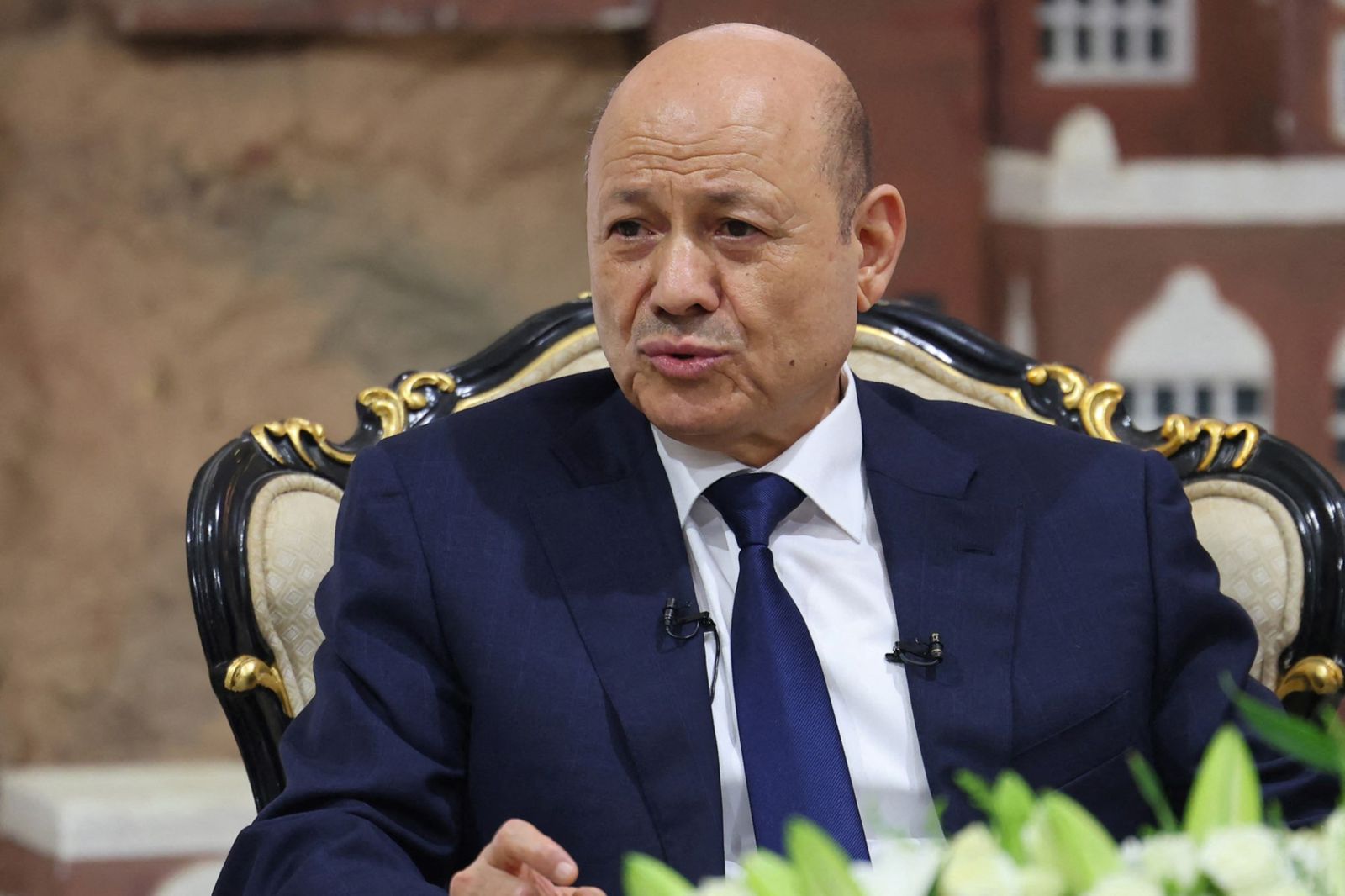
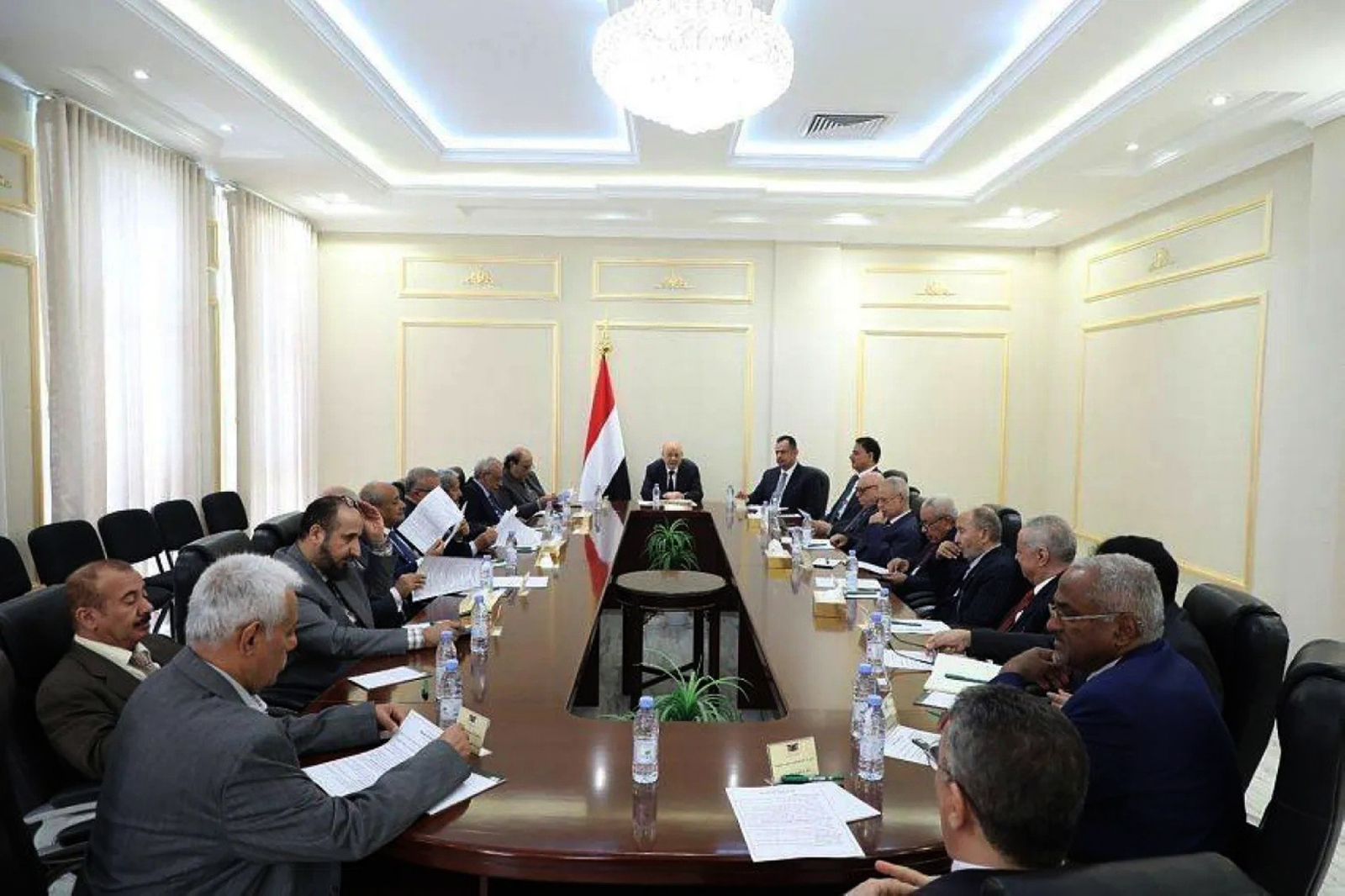

PLC President Calls for General Mobilization, Opens Door for Safe Return of Those Misled by Houthis
President Dr. Rashad Al-Alimi, President of the Presidential Leadership Council (PLC), called on the Yemeni people to engage in general mobilization

President Al-Alimi Holds Phone Call with President Abdel Fattah Al-Sisi
Fri ، 25 Sep 2026 04:43

PLC President: Armed Forces Capable of Regaining Initiative and Ending Houthi Threat
Thu ، 24 Sep 2026 04:43

President Al-Alimi Receives Reply Letter from Emir of Kuwait
Tue ، 22 Sep 2026 04:43