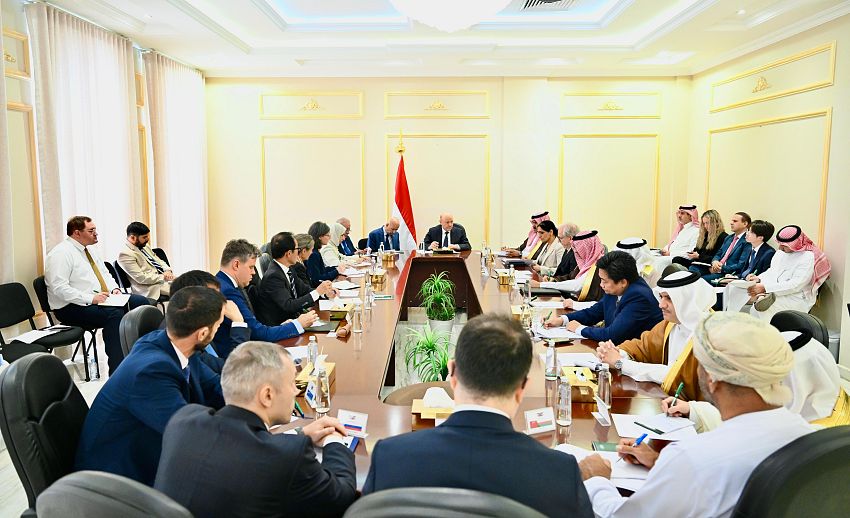
PLC President: Era of Aggression Without Consequences Is Over, Calls for International Support to End Threat
Riyadh
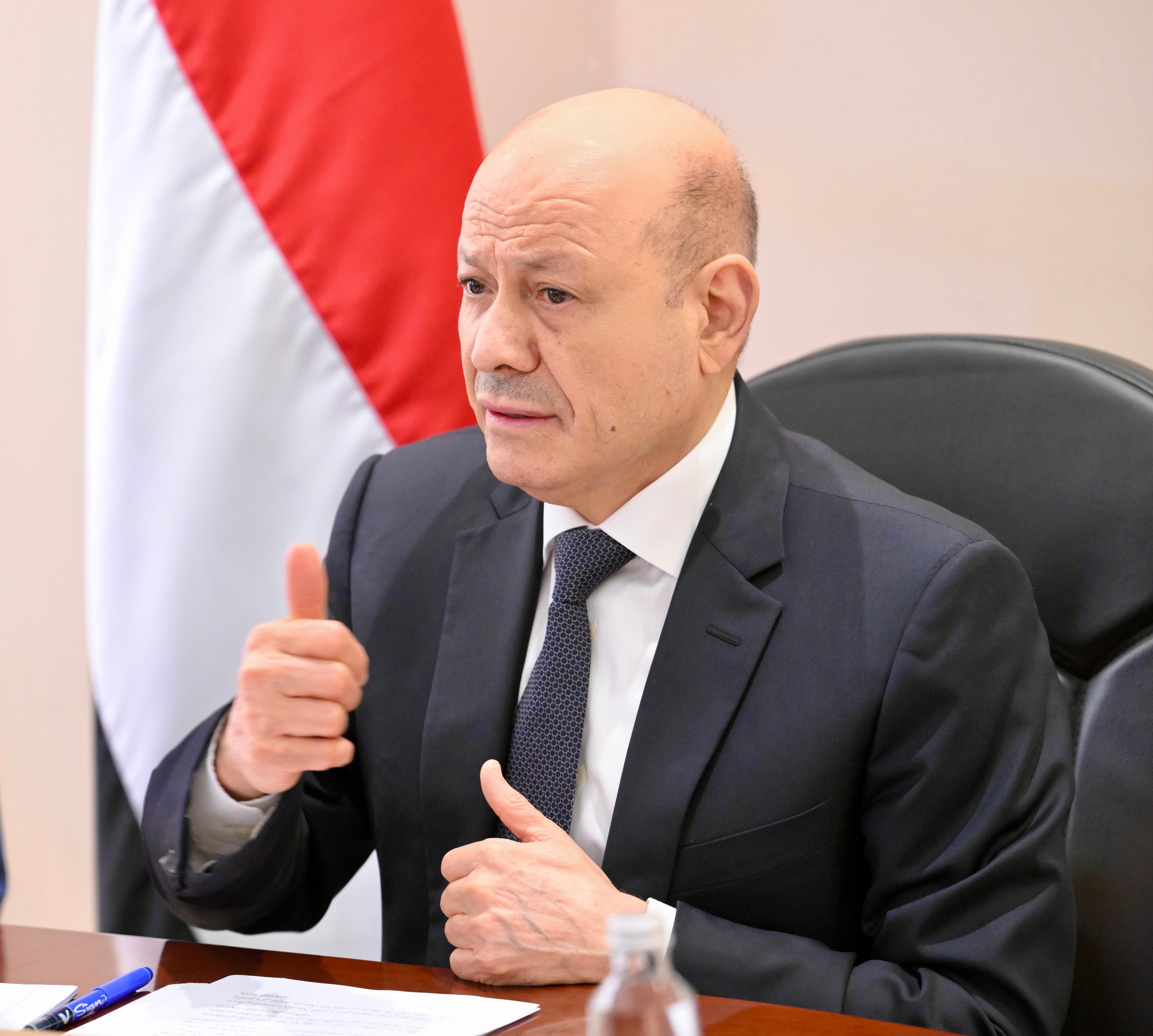
His Excellency President Dr. Rashad Mohammed Al-Alimi, President of the Presidential Leadership Council (PLC), said that the recent escalation by the Houthi terrorist militias represents a new test of the international community’s seriousness in protecting the prospects for peace. The Yemeni government, along with brotherly and friendly countries, has invested in these prospects for years.
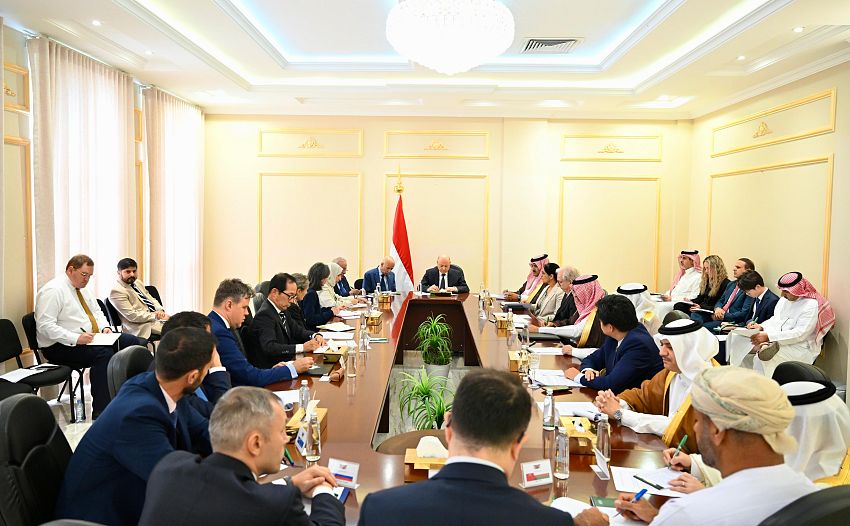
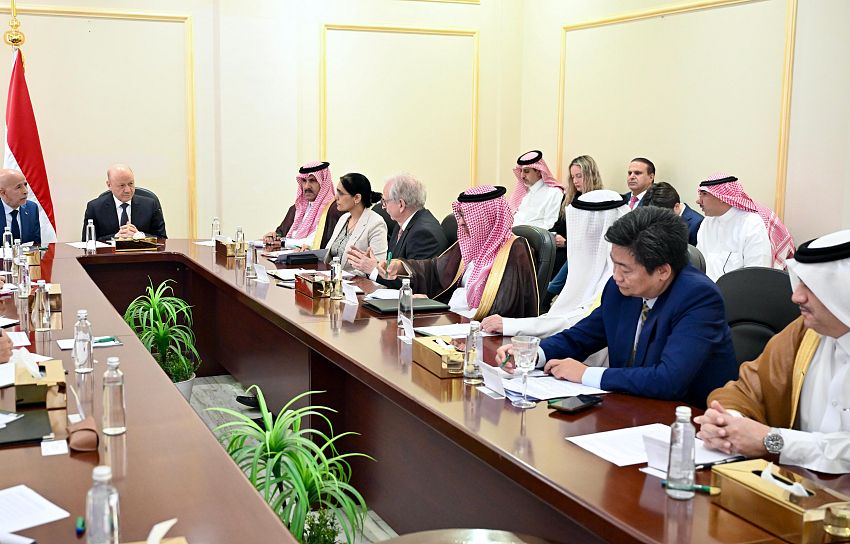
During a meeting today, Monday, with ambassadors of countries sponsoring the political process in Yemen, President Al-Alimi said that “the Yemeni state did not initiate this escalation, nor did it seek it. At the same time, however, it will not allow its commitment to peace to become an open license for the militias to choose when and where to attack, and then call on everyone to exercise restraint when a response comes.”
The President referred to the Houthi terrorist attack using ballistic missiles and drones against Mocha Port, which resulted in civilian casualties, including women and children.
He explained that the target was not a military site, but rather a maritime berth, service facilities, cargo-handling cranes, food and commodity supplies, and a number of commercial vessels berthed at the port. The attack also caused severe damage to the Saudi Hospital, the Immigration and Passports Authority, and water projects.
President Al-Alimi noted that what happened in Mocha was part of a continuing escalation that has persisted for weeks. It began with an attempt to operate flights carrying members of the Islamic Revolutionary Guard Corps to Sana’a, followed by attacks on commercial vessels and civilian targets in the Kingdom of Saudi Arabia. This culminated in terrorist attacks in Marib and Hadhramout targeting positions of the Armed Forces, sovereign facilities, civilian targets, and displacement camps.
The President reiterated the government’s repeated warnings to the international community about the impossibility of building lasting peace with an armed group that retains ballistic missiles, monopolizes decisions of war and peace, and, moreover, regards its leaders as a privileged group above the state and the rule of law.
“I want to remind our friends that the Yemeni government did not test the military option first; it tested peace first,” President Al-Alimi said. “With exceptional patience, we respected the de-escalation, exercised restraint, facilitated the movement of air traffic and ports and the flow of goods, responded to the efforts of the United Nations, our brothers and our friends. We bore a heavy political and economic cost because we believe that the lives of Yemenis are more valuable than anything else”, he added.
The President said that what is being witnessed today is the result of years of international leniency and incentives that this rogue group came to believe it could extract more of through missiles and suicide drones.
His excellency explained that the military and political equation has changed and that the militias must realize that the era of aggression without consequences is over. He said that the Yemeni Armed Forces are now more prepared and that recent developments have demonstrated that attacks on Marib, Hadhramout or the western coast have not gone unanswered. Such attacks, he stressed, were not assaults on an isolated front, but attacks on the state as a whole.
He stressed that, from now on, the state will not allow the militias to monopolize the decision to initiate confrontation, as well as its timing, location and scale, and then also monopolize the decision as to when it should end.
President Al-Alimi called on the international community to assume its responsibilities in upholding the rules of the international order. These include protecting civilians, respecting the sanctity of civilian facilities, civilian objects and commercial ports, and upholding state sovereignty. He also called for rejecting the use of missiles and drones to impose illegitimate gains.
He warned that silence or ambiguous language would not contribute to de-escalation, but could instead be interpreted by the militias as room for further escalation.
“We are not asking our friends for statements of solidarity with the government as much as we are asking them to defend rules that are supposed to concern the entire international order. Do not equate the state with terrorist militias,” the President said.
The PLC President called on the international community to adopt a clear and swift political stance condemning attacks on ports, civilian facilities and civilians, and to hold the militias responsible for the escalation. He underscored the importance of supporting the Yemeni government’s right to protect its citizens, institutions and economic facilities in accordance with international law.
Addressing the ambassadors of countries sponsoring the political process, President Al-Alimi said: “Our friends have asked us throughout the past years to give peace a chance, and we did so with full responsibility, perhaps even more than was expected. Today, we ask our friends to give the state a chance as well.”
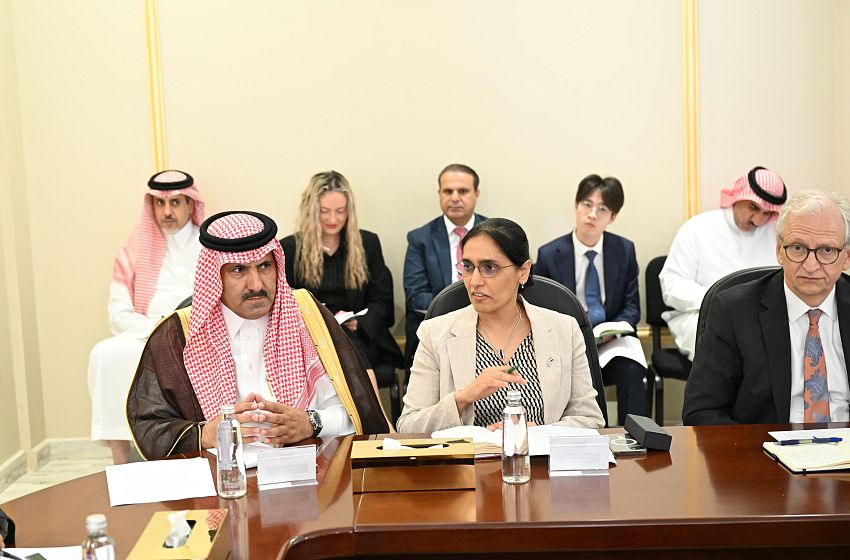
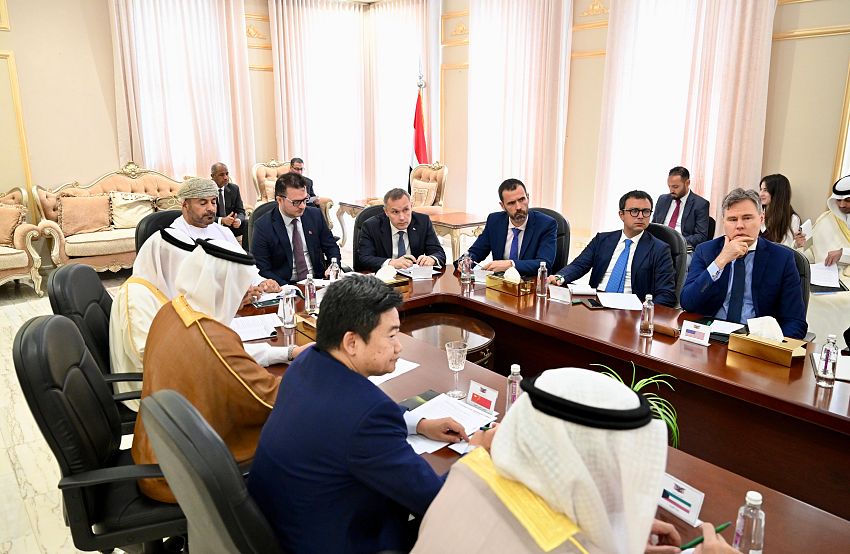
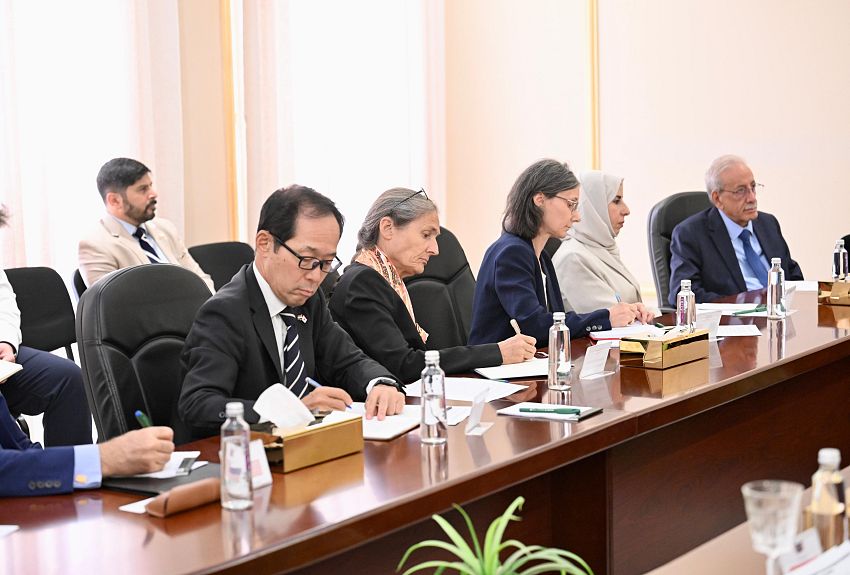
For their part, the ambassadors of countries sponsoring the political process strongly condemned the recent Houthi escalation and attacks against government forces, civilian targets and economic facilities, including Mocha Port, as well as the attacks targeting the brotherly Kingdom of Saudi Arabia and commercial vessels. They affirmed their countries’ support for efforts to confront these threats and protect civilians and the freedom and security of international navigation.
The ambassadors also renewed their countries’ support for the Presidential Leadership Council and the government, commending the restraint and responsibility demonstrated by the state during the latest wave of Houthi escalation, as well as its adherence to international law. They affirmed their rejection of the use of violence, missiles and drones as a means of securing illegitimate political and economic gains.
The ambassadors also welcomed the UN Security Council’s stance and its condemnation of the recent attacks and violations. They stressed the importance of maintaining international pressure to halt the escalation and prevent the confrontation from expanding. They also underscored the need to protect the prospects for peace and push the Houthi militias to abandon violence and make a genuine return to the political process. This would help ensure the security and stability of Yemen, the region and international waterways.
The meeting was attended by Dr. Yahya Al-Shuaibi, Director of the Presidency Office and Dr. Afrah Al-Zuba, Minister of Foreign Affairs and Expatriate.

PLC President Calls for General Mobilization, Opens Door for Safe Return of Those Misled by Houthis
President Dr. Rashad Al-Alimi, President of the Presidential Leadership Council (PLC), called on the Yemeni people to engage in general mobilization

President Al-Alimi Holds Phone Call with President Abdel Fattah Al-Sisi
Fri ، 25 Sep 2026 03:24

PLC President: Armed Forces Capable of Regaining Initiative and Ending Houthi Threat
Thu ، 24 Sep 2026 03:24

President Al-Alimi Receives Reply Letter from Emir of Kuwait
Tue ، 22 Sep 2026 03:24