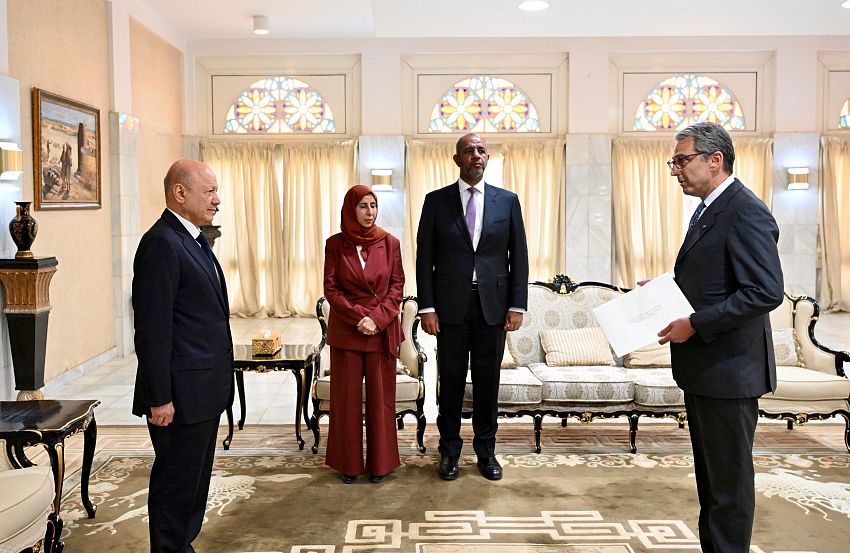
PLC President Receives Credentials of Newly Appointed Ambassadors
Riyadh
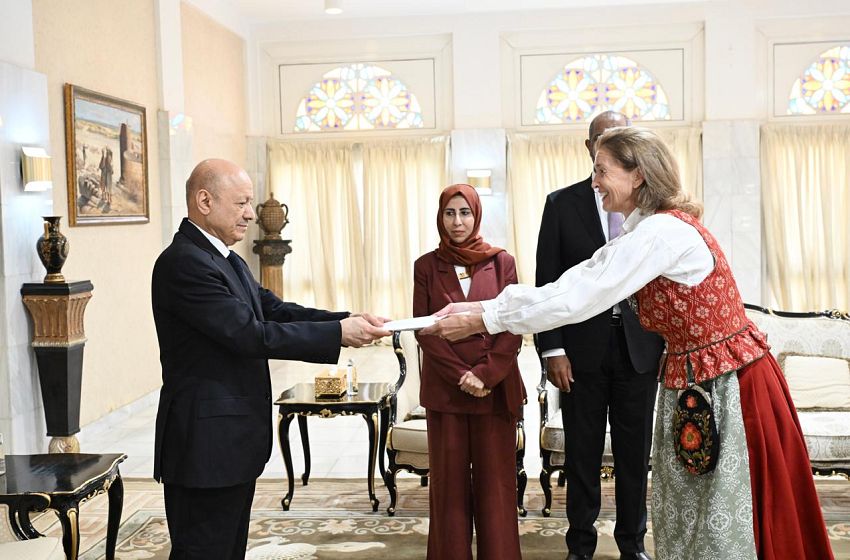
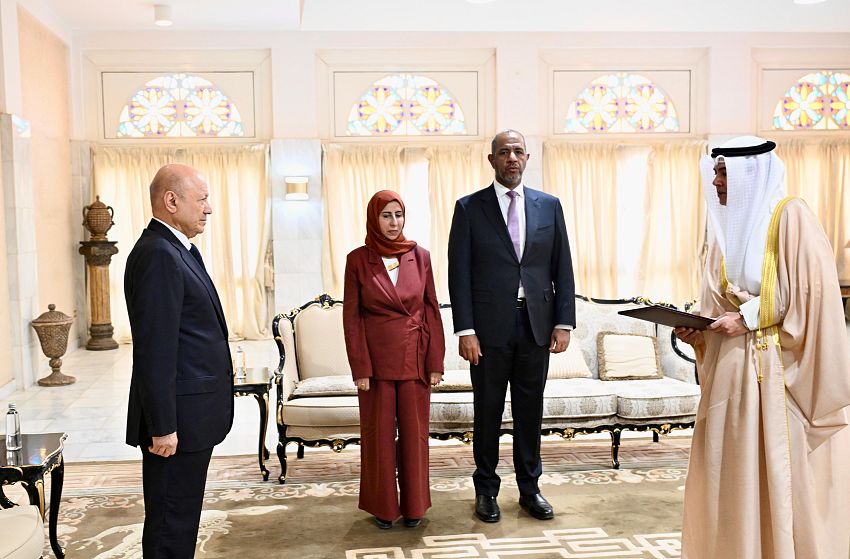
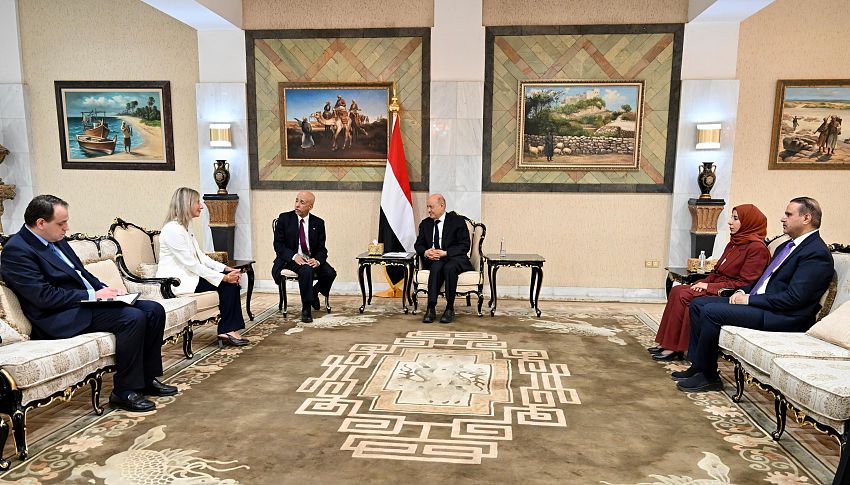
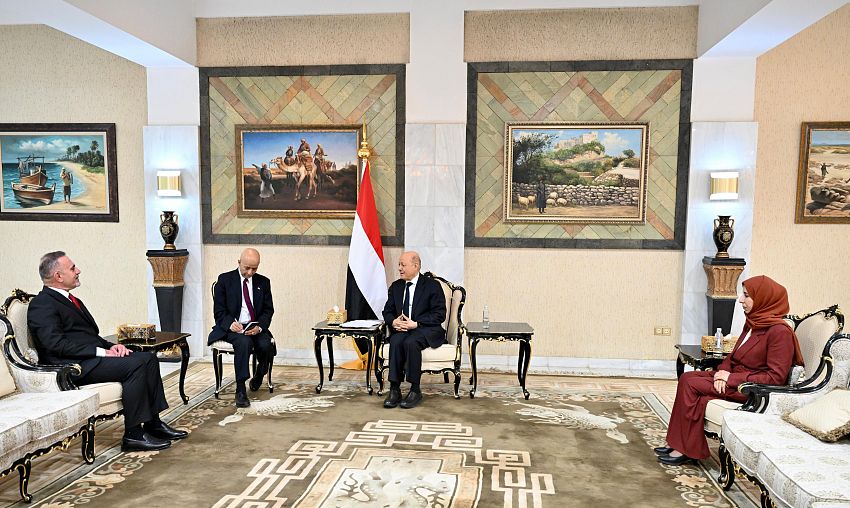
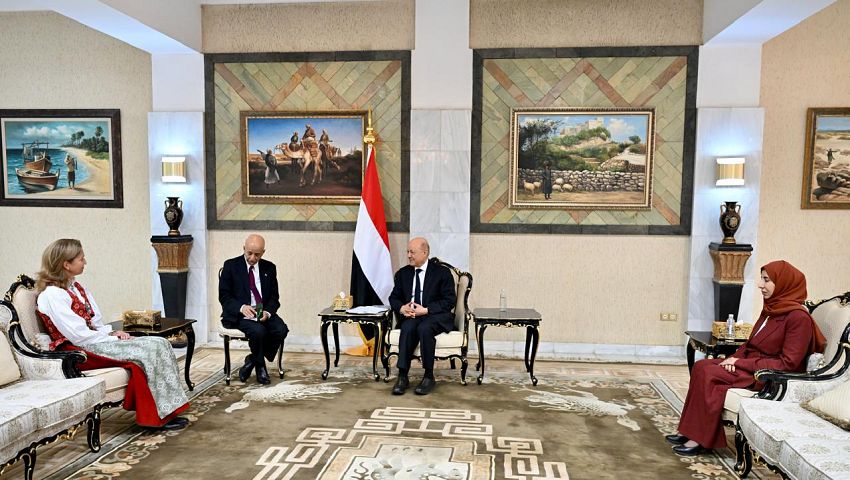
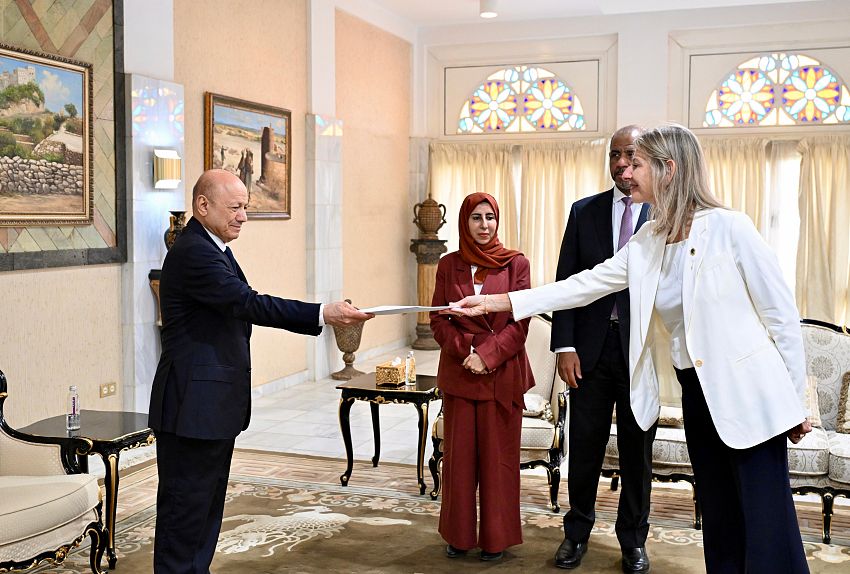
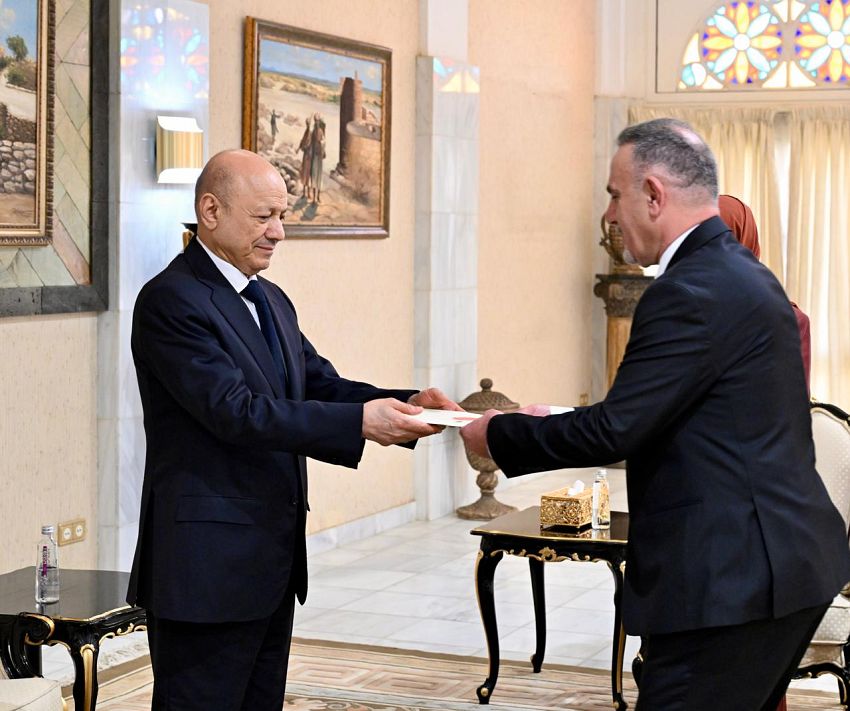
His Excellency President Dr. Rashad Al-Alimi, President of the Presidential Leadership Council (PLC), received today Thursday, the credentials of the newly appointed ambassadors of the Italian Republic, Carlo Baldocci, Kjersti Tromsdal, the Kingdom of Norway, Saimir Bala of the Republic of Albania, the Hellenic Republic, Katerina Varvigou, and the State of Kuwait, Falah Al-Mutairi.
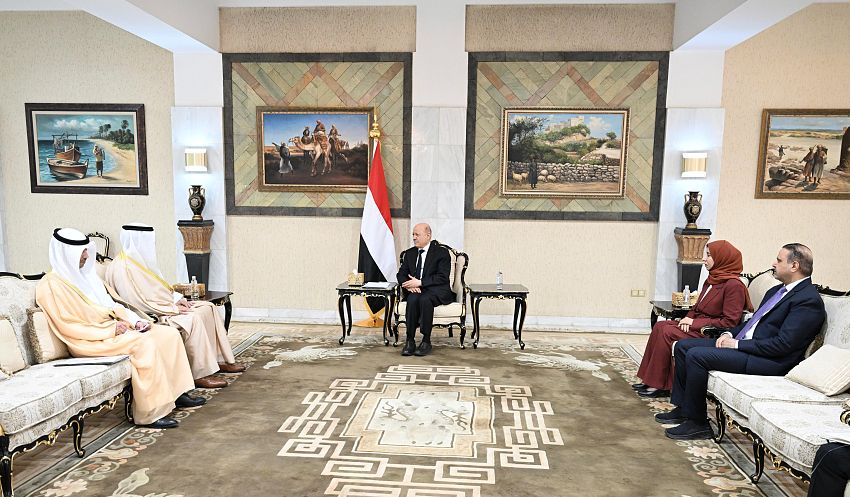
During separate meetings, the ambassadors accredited to the Republic of Yemen conveyed the greetings of their countries’ leaders to the PLC President. They also expressed their leaders’ wishes for his continued good health and happiness, as well as for security, stability and peace for the Yemeni people.
For his part, President Al-Alimi welcomed the new ambassadors and asked them to convey his greetings, and those of his fellow PLC members, to their respective leaders. He affirmed that all necessary support and facilities would be provided to enable them to carry out their diplomatic duties and further strengthen bilateral relations.
The President expressed the Yemeni leadership’s appreciation for the international community’s continued engagement at this critical stage in the Yemeni people’s history. He said: it reflected confidence in Yemen’s future and a shared commitment to advancing bilateral friendship and cooperation.
President Al-Alimi stressed that the current pivotal moment concerns not only Yemen, but also regional security, the safety of international navigation, and the future of the international order based on respect for state sovereignty and international law.
He continued, the recent Houthi escalation had not come as a surprise, but had long been anticipated, noting that it did not stem from Yemeni calculations. Rather, he said, it was part of a regional agenda linked to the Iranian Islamic Revolutionary Guard Corps (IRGC), which uses the Houthi militias as a tool of pressure and bargaining whenever Tehran comes under political or military pressure.
The President recalled the government’s consistent welcome of all serious peace initiatives. However, he noted that whenever prospects for de-escalation emerged, the Houthi militias had repeatedly returned the crisis to square one. They did so by manufacturing new crises, opening additional fronts, targeting international shipping, or escalating against neighboring countries.
President Al-Alimi also addressed the humanitarian catastrophe caused by the Houthi terrorist militias, noting that more than 20 million Yemenis are in need of some form of humanitarian assistance.
He emphasized that this crisis was not the result of geography, sanctions, or the international community, but rather of the coup, the war, the looting of resources, the destruction of the economy, the prolongation of the conflict, and the diversion of state resources to serve a cross-border military project.
In this context, the President stressed that humanitarian assistance must go hand in hand with support for state institutions so that aid does not become a factor in prolonging the suffering.
President Al-Alimi also briefed the ambassadors on the government’s efforts to implement institutional and economic reforms, restore state institutions, enhance transparency, and improve the investment climate.
He said that investing in the legitimate government and its national institutions represents the shortest path toward stability in Yemen, the region, and the vital maritime corridors.
The President also highlighted Iran’s destabilizing role in militarizing local communities, threatening international shipping, and undermining prospects for peace. In this regard, he expressed his deep appreciation for the responsible role played by the Kingdom of Saudi Arabia in supporting Yemen’s economy, state institutions, peace efforts, and humanitarian response plans.
President Al-Alimi underscored the importance of seizing the current regional moment to reshape the region’s security and stability architecture. He said it represented a genuine opportunity to end the model of cross-border armed militias, which over past decades has destabilized several countries in the region, prolonged conflicts, and threatened the global economy.
The President reaffirmed that Yemen would no longer accept remaining an open arena for blackmail by militias. He stressed that, in partnership with the international community, Yemen would use all available means to secure one of the world’s most important maritime corridors and combat terrorism, piracy, irregular migration, and organized crime.
The credential ceremony and meetings were attended by Minister of Foreign Affairs and Expatriates Dr. Afrah Al-Zouba and Chief of Presidential Protocol Mohammed Haj Mahfouz.

PLC President Calls for General Mobilization, Opens Door for Safe Return of Those Misled by Houthis
President Dr. Rashad Al-Alimi, President of the Presidential Leadership Council (PLC), called on the Yemeni people to engage in general mobilization

President Al-Alimi Holds Phone Call with President Abdel Fattah Al-Sisi
Fri ، 25 Sep 2026 03:24

PLC President: Armed Forces Capable of Regaining Initiative and Ending Houthi Threat
Thu ، 24 Sep 2026 03:24

President Al-Alimi Receives Reply Letter from Emir of Kuwait
Tue ، 22 Sep 2026 03:24