PLC President: Houthi-Controlled Areas Among World’s Worst Places to Live
Riyadh
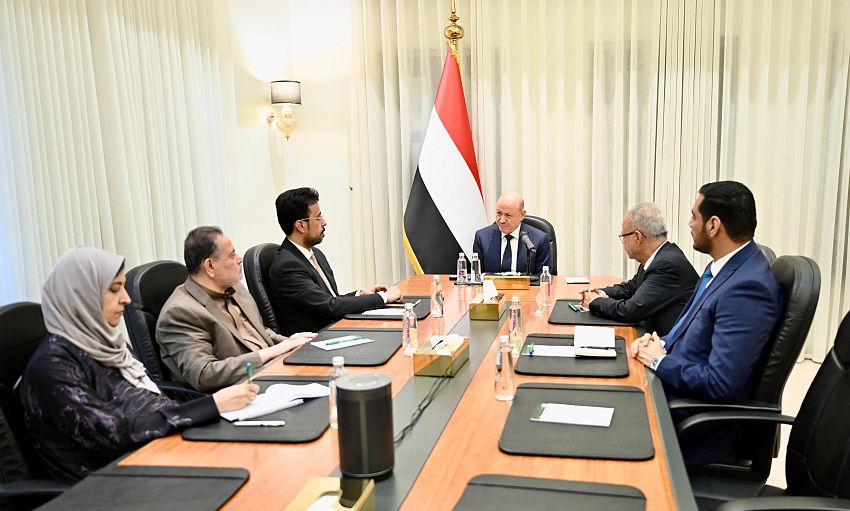
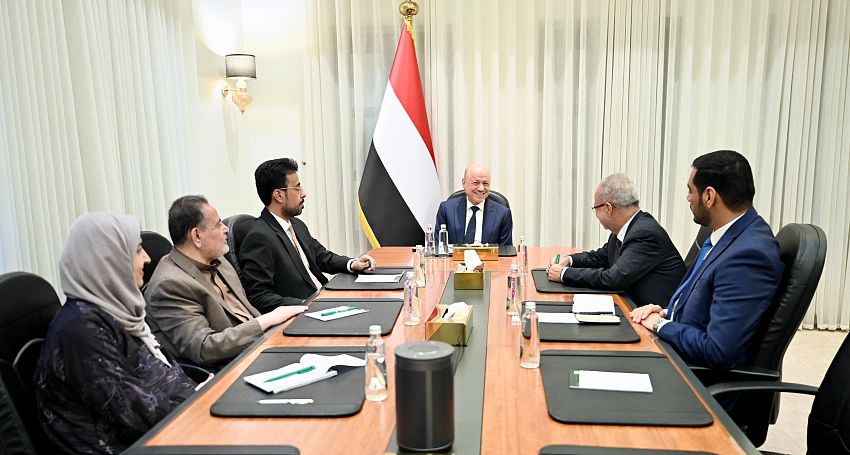
His Excellency President Dr. Rashad Al-Alimi, President of the Presidential Leadership Council (PLC) met today, Tuesday, with Chairman of the Consultation and Reconciliation Commission Mohammed Al-Ghaithi and the commission’s deputies Abdulmalik Al-Mikhlafi, Sakhr Al-Wajeeh, Akram Al-Ameri and Dr. Balqees Abu Osba.
The meeting reviewed the latest national developments and the commission’s efforts to strengthen national consensus and support state institutions in addressing ongoing challenges, foremost among them the continued escalation by the Iran-backed Houthi terrorist militias.
President Al-Alimi briefed the commission’s leadership on the latest political, security and military developments. He also briefed them on the government’s measures to respond responsibly to these developments, safeguard state sovereignty and expose the false claims of the terrorist militias.
He said the militias continued their desperate attempts to escalate the situation. He stressed the need to maintain the highest level of vigilance, strengthen national unity and prevent them from dragging Yemen once again into futile conflicts that would harm the interests of the peoples of the region, particularly the countries bordering the Red Sea.
In this context, the President reaffirmed that the era of blackmail, threats and intimidation had come to an end. He said the Yemeni state would no longer allow such practices or permit any party to monopolize decisions on war and peace or dictate the course of events for Yemen, regional security and international peace.
President Al-Alimi said the Yemeni people had grown weary of the militias’ slogans and reckless adventures, which had turned areas under their control into one of the worst places to live on earth. He stressed that no party, regardless of its power, could shape Yemen’s future or that of its people through coercion or blackmail.
The President also reviewed the initiatives launched by the state in recent days and weeks to spare the country further escalation. He said the government had responded to recent developments with the highest degree of responsibility by protecting state sovereignty, safeguarding civilian lives and welcoming all humanitarian initiatives that respect international law and the sovereignty of the Republic of Yemen.
“If some believe that restraint is a sign of weakness, or that the commitment to peace reflects retreat, they misunderstand the will of the Yemeni people. They fail to appreciate the responsibility of any leadership committed to achieving its people’s aspirations at the lowest possible cost,” he said.
President Al-Alimi affirmed that the Presidential Leadership Council and the government remained open to every sincere effort aimed at achieving peace and ending the suffering of the Yemeni people. However, he stressed that the desired peace must address the root causes of the crisis, restore the authority of the state, guarantee equality among all Yemenis and end the existence of any armed formations operating outside state institutions.
He added that any future understandings or arrangements would not result from threats or blackmail, but from the resilience of the state and the steadfastness of its people. He said they would also be based on the growing conviction within the regional and international communities that Yemen’s stability begins with the restoration of its state institutions. He stressed that stability cannot be achieved by consolidating the status quo.
The President also discussed the government’s economic, financial and administrative reform agenda. He highlighted progress in improving the efficiency of public institutions, enhancing transparency, increasing state revenues and addressing structural imbalances, with generous support from the Kingdom of Saudi Arabia and international partners.
He emphasized that the resilience of state institutions and their continued ability to meet essential obligations would not have been possible without Saudi Arabia’s sincere fraternal support. He praised the Kingdom’s sustained political, economic and humanitarian assistance, which has helped preserve the cohesion of state institutions, alleviate the suffering of the Yemeni people, finance and implement vital development projects and strengthen prospects for recovery across various sectors.
President Al-Alimi reaffirmed the government’s commitment to institutional reforms, strengthening the independence of oversight bodies, improving the investment climate and advancing the capabilities of the armed forces and security services. He also stressed the importance of unifying military and security decision-making and enabling state institutions to carry out their responsibilities across all governorates as the true guarantee of lasting security and stability.
The President expressed confidence in the Consultation and Reconciliation Commission’s role in supporting these efforts, consolidating national consensus and strengthening unity in the battle to liberate the country and end the coup. He said these efforts would enable Yemenis to focus on building the just state that all citizens deserve.

PLC President Calls for General Mobilization, Opens Door for Safe Return of Those Misled by Houthis
President Dr. Rashad Al-Alimi, President of the Presidential Leadership Council (PLC), called on the Yemeni people to engage in general mobilization

President Al-Alimi Holds Phone Call with President Abdel Fattah Al-Sisi
Fri ، 25 Sep 2026 03:24

PLC President: Armed Forces Capable of Regaining Initiative and Ending Houthi Threat
Thu ، 24 Sep 2026 03:24

President Al-Alimi Receives Reply Letter from Emir of Kuwait
Tue ، 22 Sep 2026 03:24