PLC President: IRGC Flight to Sana’a Violates Yemen’s Sovereignty and Defies International Order
Riyadh
His Excellency President Dr. Rashad Mohammed Al-Alimi, President of the Presidential Leadership Council, called for a firmer international response to Iranian involvement in Yemen following the operation of a flight affiliated with the Islamic Revolutionary Guard Corps (IRGC) to Sana’a International Airport, which is under the control of the Houthi group. He described the flight as a violation of Yemen’s sovereignty and a breach of international law and relevant UN Security Council resolutions.
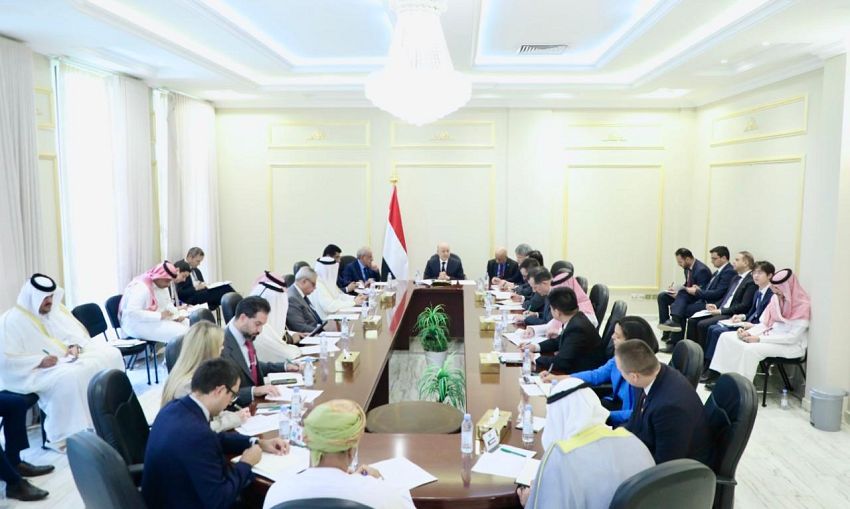
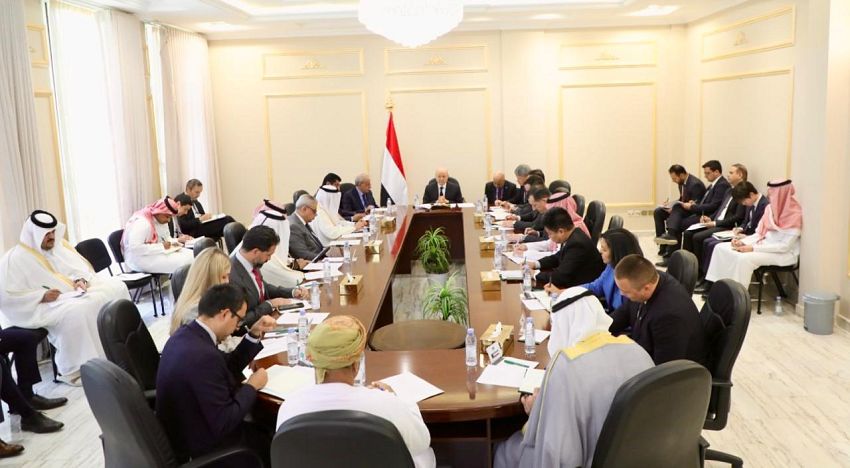
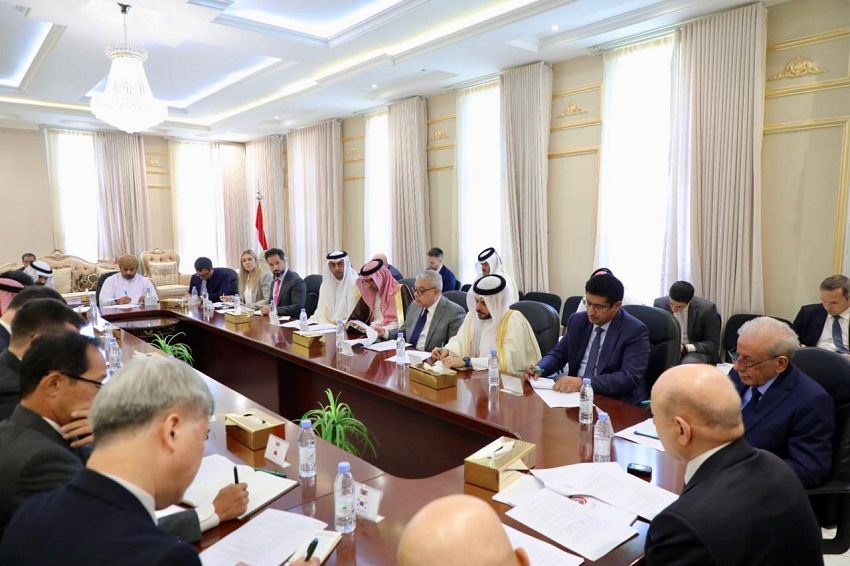
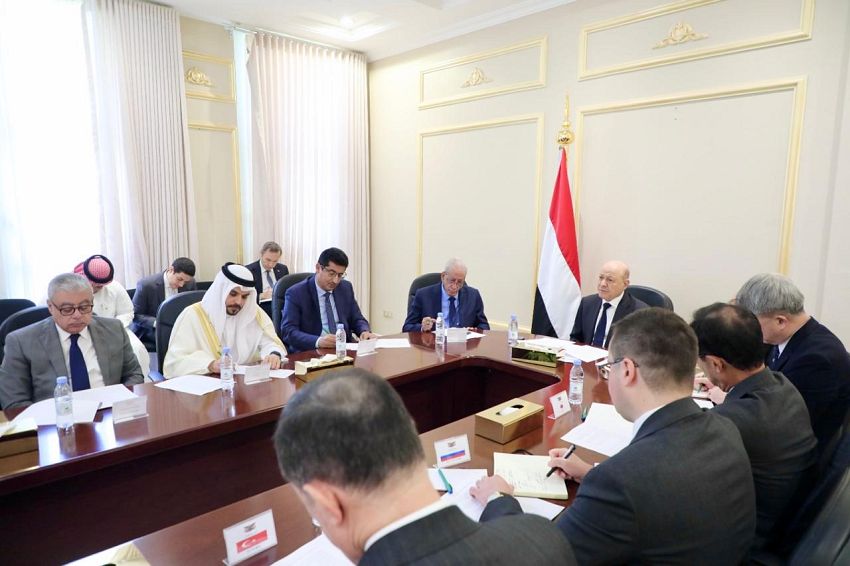
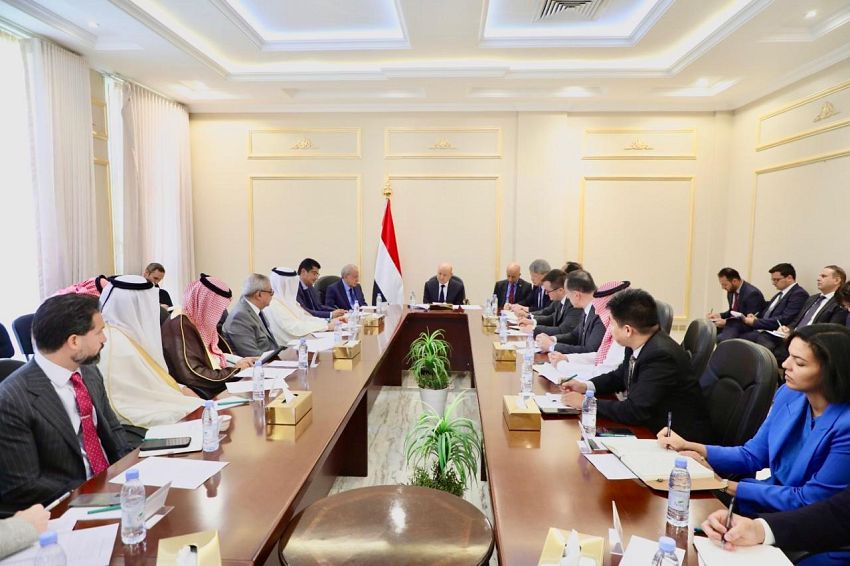
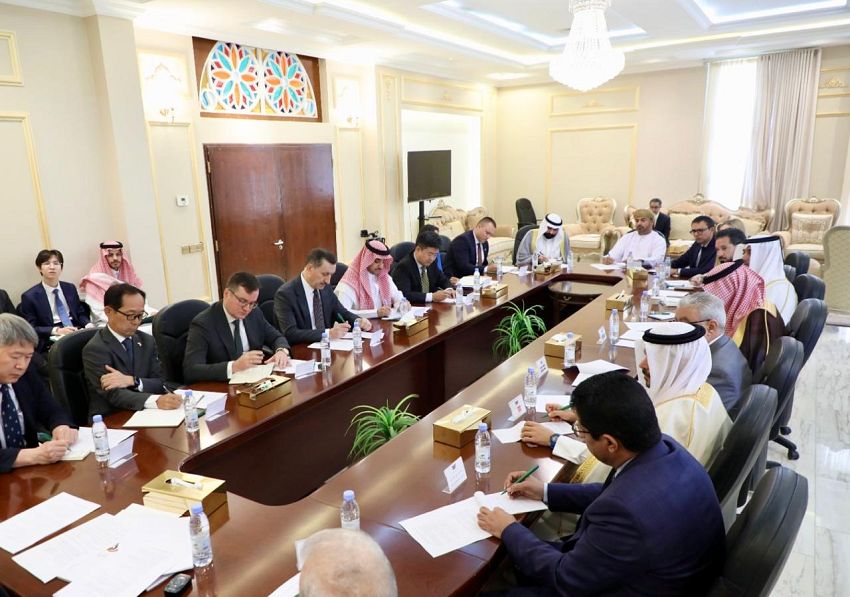
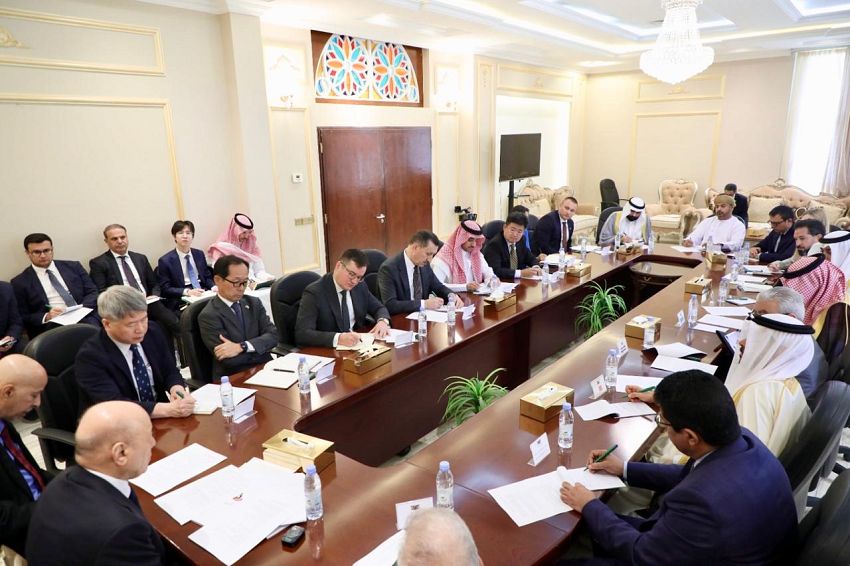
Speaking during a meeting today, Monday, with ambassadors of the countries sponsoring the Yemeni political process, President Al-Alimi urged the international community to strictly enforce UN Security Council resolutions and sanctions, including measures to prevent the use of civil aviation, airports, and ports to transport military experts or dual-use equipment. He also called for tighter oversight of financial and smuggling networks linked to the Houthi group.
He called for an international investigation into what he described as Iranian violations, including the cargo carried by the IRGC-affiliated aircraft, which he said disabled its tracking system while flying over Yemeni airspace.
President Al-Alimi also urged stronger sanctions against the Houthis as a peaceful means of implementing UN Security Council Resolution 2216. He further called for increased political and economic support for the Yemeni government as a partner in restoring state institutions, advancing peace efforts, protecting international shipping lanes, and combating terrorism and organized crime.
He said Yemen is asking the international community to uphold the principles of the international system. He warned that failure to deter armed groups from violating Security Council resolutions, circumventing sanctions, using civil aviation to transfer military expertise, and threatening global energy security, international navigation, and the world economy would have consequences extending beyond Yemen.
President Al-Alimi said the Yemeni issue had become a challenge to the international order rather than merely an internal conflict. He described the latest Iranian move as a dangerous escalation and an attempt to test the international community’s willingness to enforce its resolutions and sanctions and impose new fait accompli.
He said Yemen regarded the incident as an issue affecting both its sovereignty and the credibility of the international system. He warned that failure to address such violations would encourage further breaches and undermine the authority of UN Security Council resolutions.
President Al-Alimi said preliminary information contradicted Houthi claims that the flight was humanitarian in nature. He said the aircraft had transported military and security personnel, Iranian specialists in drone and missile systems, electronic and communications equipment with potential military applications, and Yemeni personnel who had received security training in Iran.
He added: “The indicators are not limited to the nature of the passengers and cargo. Repeated interruptions in the aircraft’s tracking signals were recorded while it was crossing Yemeni airspace, a pattern of conduct that contradicts the militia’s claims that it was a humanitarian flight and warrants an independent international investigation to determine the circumstances and objectives.”
President Al-Alimi also said the aircraft belonged to an airline that had previously been linked to international sanctions and accusations of providing logistical support to the IRGC, describing this as an additional factor underscoring the seriousness of the incident.
President Al-Alimi said Iran had, for decades, supported an armed group operating outside the authority of the Yemeni state by providing various forms of political, military, and media support. This included the transfer of military expertise and technology, support for the war economy, and encouraging the continuation of the conflict in pursuit of its regional agenda to undermine state institutions across the region.
President Al-Alimi said the Republic of Yemen did not view the Iranian people as an adversary and did not seek to undermine relations of friendship between peoples. He said it rejected the Iranian regime’s policies of supporting armed militias, interfering in the internal affairs of other states, and undermining their national institutions in violation of the principles of good-neighborliness and the Charter of the United Nations.
President Al-Alimi said the Iranian regime had made no contribution over past decades to supporting development efforts or financing humanitarian response plans, while continuing to expand its support for the Houthi terrorist militia, prolong the conflict, and deepen the humanitarian crisis.
In contrast, President Al-Alimi highlighted Saudi Arabia’s constructive role in supporting Yemen across multiple sectors, particularly through support for state institutions, preserving their stability, and alleviating the suffering of the Yemeni people. He said this support had been delivered through parallel political, economic, humanitarian, and development tracks, including demining efforts.
President Al-Alimi also praised Saudi Arabia’s role in supporting peace efforts, sponsoring political initiatives, financing relief, development, and reconstruction projects, and supporting the Central Bank of Yemen, which had contributed to monetary stability. He also cited Saudi funding for electricity, water, health, education, and other essential services across Yemen, as well as the Kingdom’s hosting of millions of Yemenis for employment, residence, education, and investment.
He said the contrast between the two approaches should be clearly recognized, adding that while Iran invested in militias, the continuation of the conflict, and the undermining of the national state, Saudi Arabia invested in state institutions, development, improving the livelihoods of Yemenis, and creating the conditions necessary for peace and stability in the country.
President Al-Alimi rejected misleading Houthi narratives and false claims of defending national sovereignty. He said these assertions contradicted the group’s organic relationship with Iran, which he said had extended beyond political support to ideological, military, security, and logistical ties.
He said genuine defense of sovereignty begins with adherence to the constitution, respect for state institutions, the monopoly of arms by the state, and preventing the Yemeni people from being drawn into futile wars.
President Al-Alimi held the Houthi militia directly responsible for deepening the humanitarian crisis in the country. He said the current crisis began with the group’s coup against the state, the seizure of its legitimate institutions, the outbreak of war, and the rejection of all political initiatives that could have spared Yemen from its current trajectory.
He said attributing the humanitarian crisis to the Yemeni government or the Saudi-led coalition ignored its root cause, namely the armed takeover, the continued militarization of society, the undermining of state institutions, and the targeting of the national economy and its sovereign resources.
He said this narrative represented one of the most prominent tools of misinformation used by the group to evade responsibility for the humanitarian situation facing the Yemeni people.
He noted that while hundreds of thousands of public sector employees in areas under Houthi control remained without salaries, the group continued to direct substantial resources toward arms purchases and smuggling, as well as the development of missiles and drones. He added that these resources were also being allocated to recruitment activities, the establishment of military camps, public rallies, and propaganda and mobilization campaigns.
He also referred to reports indicating that the Houthis had allocated significant funds to clandestine cells and activities aimed at undermining security and stability in government-controlled areas. This included financing targeted assassinations of civilian leaders, instead of directing those resources toward salaries, service delivery, and humanitarian relief.
He added these practices confirmed that the group’s priorities lay in sustaining a war economy rather than meeting citizens’ needs or improving living conditions.
He also addressed serious violations committed by the Houthis in areas under their control, which had significantly harmed humanitarian operations and forced several programs to reduce or suspend life-saving assistance, directly affecting millions of beneficiaries.
He said “the group could not claim to defend humanitarian work while targeting humanitarian organizations and using aid as a tool of pressure, extortion, and control.”
President Al-Alimi also dismissed Houthi claims of commitment to peace, saying their record since the coup against state institutions demonstrated a consistent pattern of rejecting national and international frameworks and undermining settlement opportunities whenever progress was within reach.
He recalled the group’s rejection of the outcomes of the National Dialogue Conference, its withdrawal from commitments under UN Security Council resolutions, and its treatment of agreements and initiatives as tools to buy time and rebuild military capabilities.
He said the Houthis had exploited truces and humanitarian pauses to strengthen fortifications, develop military capabilities, and redeploy forces instead of taking confidence-building measures or alleviating civilian suffering. He also cited continued fragmentation of economic institutions, unilateral measures, targeting of sovereign state revenues, and threats to international navigation as actions incompatible with any genuine commitment to ending the war.
He reaffirmed that peace could only be achieved through adherence to agreed reference frameworks, respect for state institutions, ending the coup, and returning to the free will of the Yemeni people.
He said the Houthis continued to invest in war, mobilization, and battlefield escalation, exploiting every ceasefire and political initiative to rearm and prepare for renewed confrontation, warning of a firm response on all fronts.
President Al-Alimi reiterated the commitment of the Presidential Leadership Council and the government to a just peace based on agreed national, regional, and international references, noting that it served the genuine interests of the Yemeni people.
He added: “therefore the government had supported the Gulf Initiative, the outcomes of the National Dialogue Conference, and UN Security Council resolutions, and had participated in various negotiation rounds while endorsing regional and international ceasefire initiatives aimed at ending the war.”
He said the Houthi group had demonstrated that the Yemeni issue had become a direct challenge to the international order. He added: “accordingly the question is no longer what the group had done, but what it might do in the future if international deterrence continued to be absent.”
The meeting was attended by Dr. Yahya Al-Shuaibi, Director of the Office of the Presidency, and Mr. Mansour Bajash, the Undersecretary of the Ministry of Foreign Affairs for Political Affairs.

PLC President Calls for General Mobilization, Opens Door for Safe Return of Those Misled by Houthis
President Dr. Rashad Al-Alimi, President of the Presidential Leadership Council (PLC), called on the Yemeni people to engage in general mobilization

President Al-Alimi Holds Phone Call with President Abdel Fattah Al-Sisi
Fri ، 25 Sep 2026 03:24

PLC President: Armed Forces Capable of Regaining Initiative and Ending Houthi Threat
Thu ، 24 Sep 2026 03:24

President Al-Alimi Receives Reply Letter from Emir of Kuwait
Tue ، 22 Sep 2026 03:24