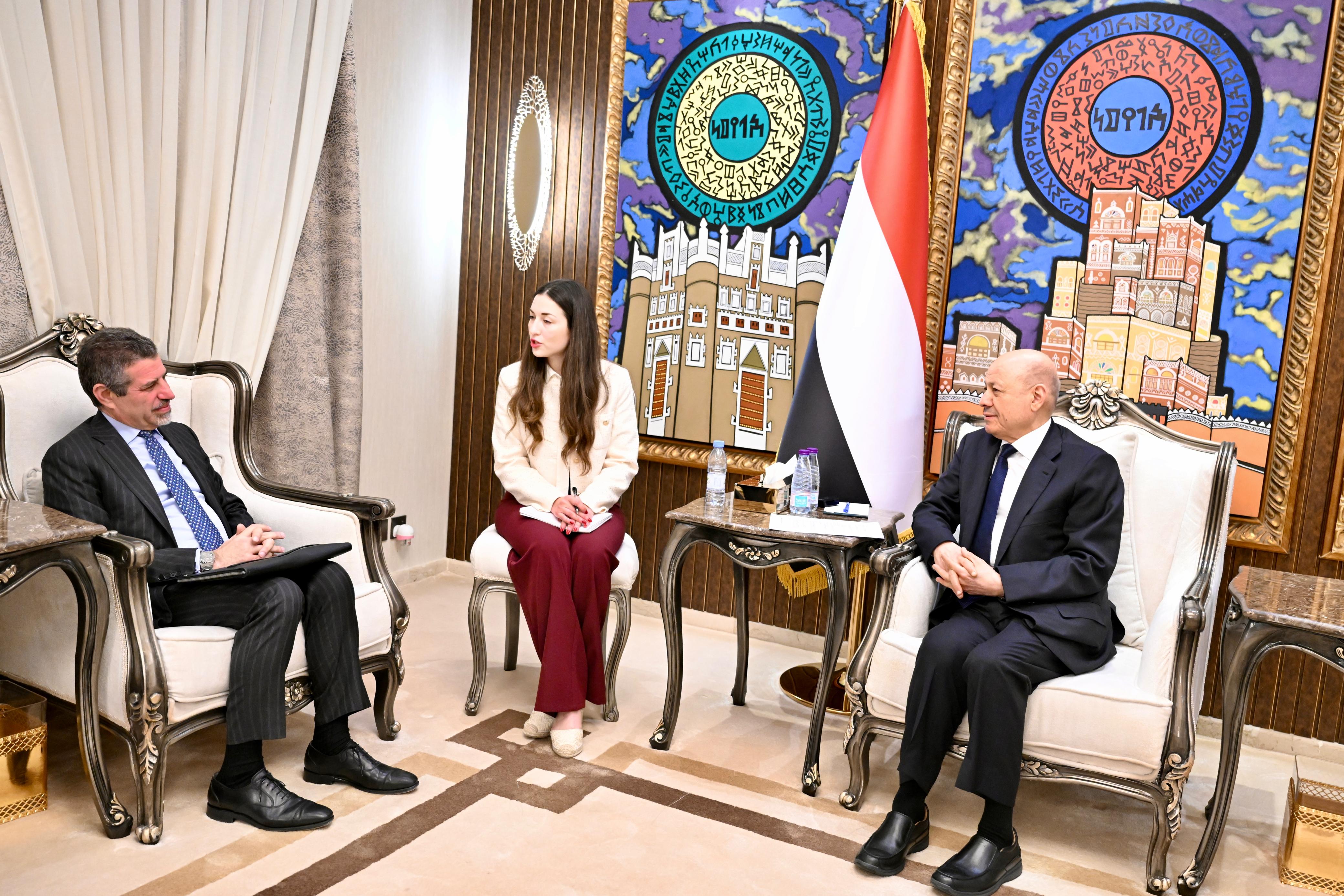
President Al-Alimi Affirms Strict Commitment to Enforcing Sovereign Decisions, Warns of Repercussions of Rebellion on Yemen’s and Region’s Security
Riyadh
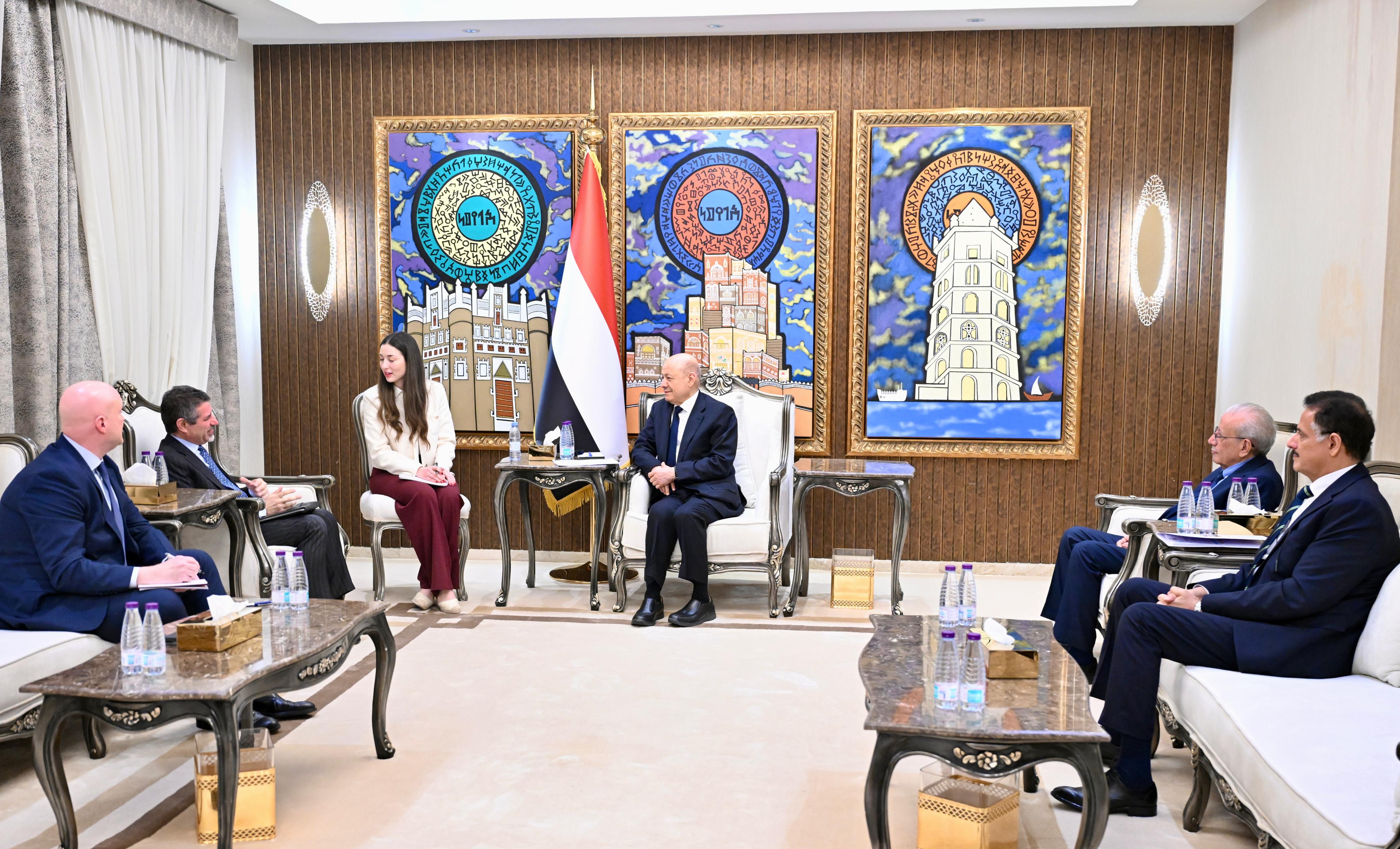
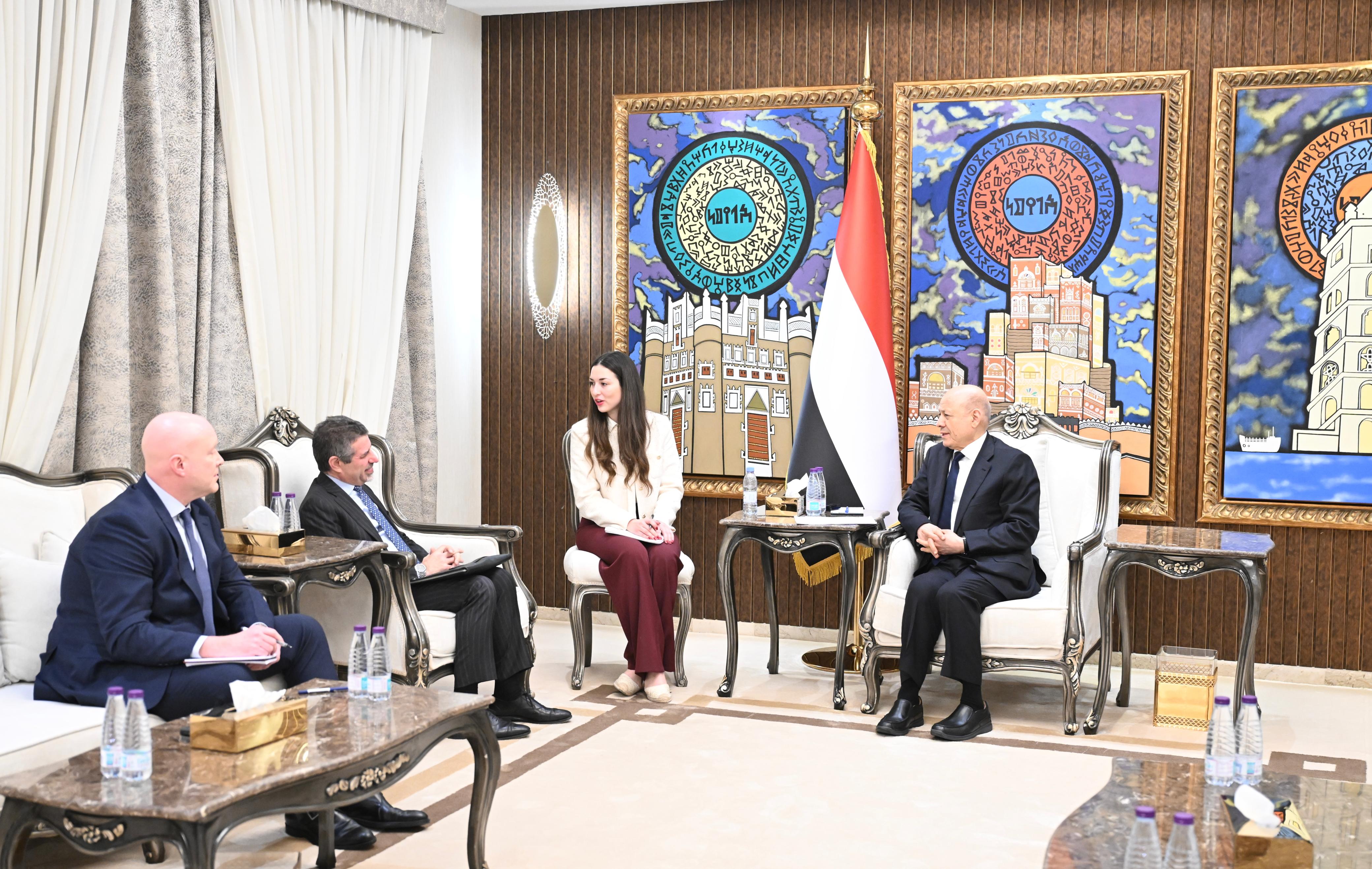
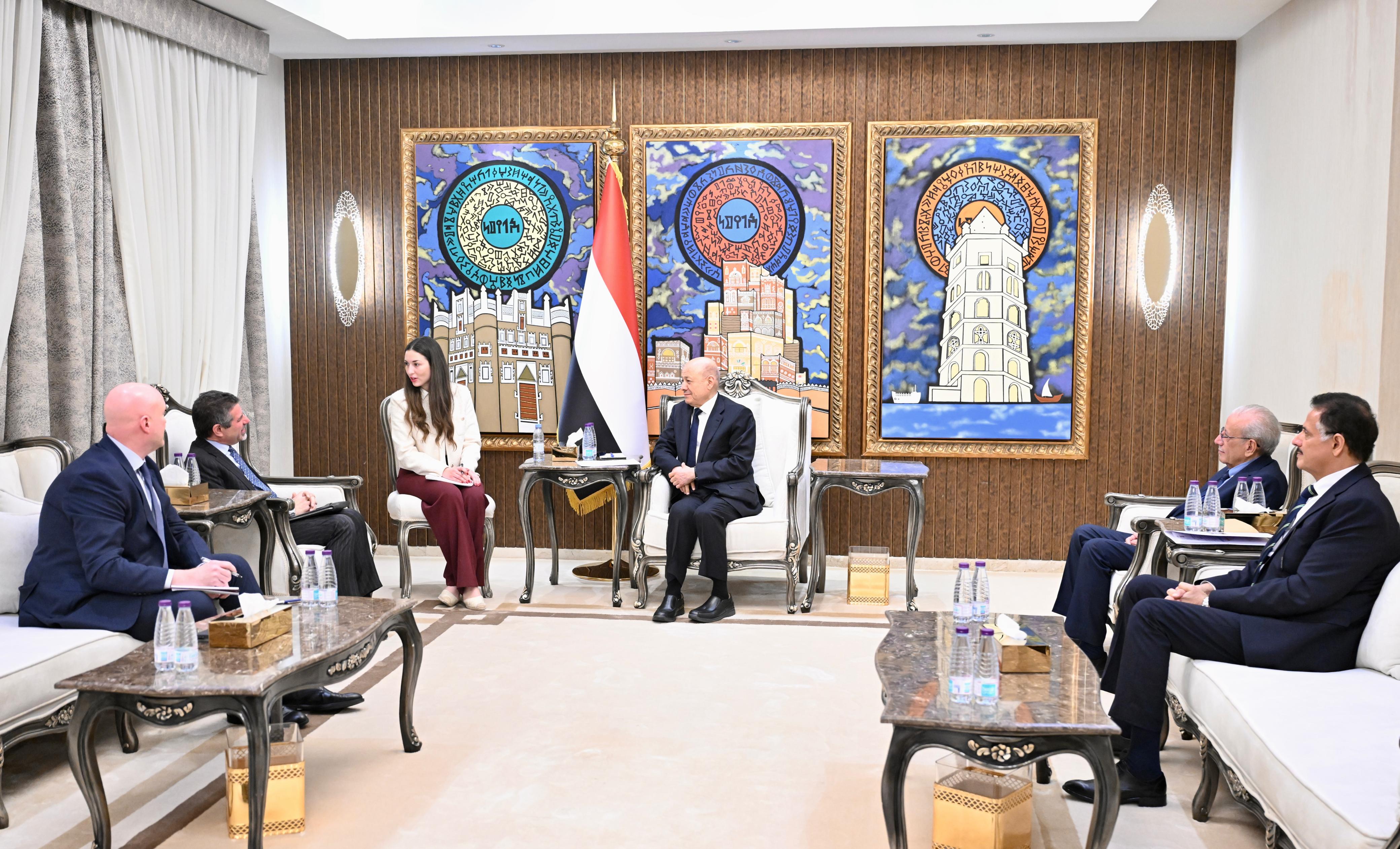
His Excellency President Dr. Rashad Mohammed Al-Alimi, President of the Presidential Leadership Council, today Wednesday, received Mr. Steven Fagin, the Ambassador of the United States of America to Yemen. The meeting reviewed the latest developments in the country and their economic and security implications, in light of recent developments in the governorates of Hadhramaut and Al-Mahrah.
President Al-Alimi expressed his appreciation for the partnership with the United States and Washington’s pivotal role in supporting the security and stability of Yemen and the region, and in deterring interconnected terrorist threats.
The President of the Presidential Leadership Council clarified that the challenges facing the state today do not fall within the scope of political differences, but rather constitute an armed rebellion against state authority, its sovereign decisions, and the references governing the transitional phase. He warned that this has created a dangerous gap that threatens to turn Yemen into a hub of broad regional instability and to undermine the progress achieved in security and stability tracks at all levels.
President Al-Alimi noted that this rebellion has had a direct impact on the international community’s priorities in Yemen, foremost among them confronting the Iran-backed Houthi terrorist militias, combating Al-Qaeda and ISIS, protecting maritime routes and energy supplies, and safeguarding the security of neighboring countries. He stressed that the continuation of unilateral measures has enabled the Houthi militias to remobilize and created a conducive environment for the resurgence of terrorist groups after they had been at their weakest.
In this context, the President emphasized that counterterrorism is a sovereign decision of the Yemeni state, exercised by its competent institutions. He underscored that Yemeni forces, with the support of the United States and regional and international partners, have achieved tangible successes in this regard, warning against exploiting this banner as a pretext to impose a fait accompli by force or to undermine state institutions.
President Al-Alimi reviewed the efforts undertaken by the Presidency to avoid escalation, including his explicit directives to prevent any military movements outside the framework of the state, the approval of a national redeployment plan in Wadi Hadhramaut—of which only one phase remains—and the formation of a high-level communication committee after exhausting all channels of dialogue. He also pointed to the obstruction by the Southern Transitional Council and its allies of meetings of the Presidential Leadership Council and the work of the government.
The President explained that the recent presidential decisions were taken as peaceful measures to protect civilians, halt violations, and support de-escalation efforts led by the Kingdom of Saudi Arabia.
He noted that the decisions were based on the Constitution and the exclusive powers of the President of the Presidential Leadership Council—foremost among them supreme command of the armed forces and the declaration of a state of emergency—pursuant to the Declaration of Transfer of Power, the rules governing the Council’s work, and following extensive consultations with relevant advisory bodies. He stressed that these decisions were not a political option, but a constitutional necessity to protect the state and citizens and to restore security and stability.
President Al-Alimi renewed the state’s commitment to a fair solution to the Southern Issue, as a just cause with historical and social dimensions, in accordance with options determined by the free will of the people. He rejected the imposition of any solution by force of arms or its reduction to exclusive representation, warning that hijacking the Southern Issue undermines its just nature and leads to a prolonged conflict.
The President also affirmed Yemen’s appreciation for the role previously played by the United Arab Emirates.
He stressed that support for any components operating outside the framework of the law to undermine the state’s legal standing and the existing consensus constitutes a clear violation of the references of the transitional phase and the foundations of the Coalition to Support Legitimacy.
He added that such support diverts efforts away from confronting the real enemy responsible for the devastation in the country.
He further underscored the urgent need for a unified international position to condemn and deter the threats that triggered the crisis, and to support Yemenis’ aspirations to end the war and restore the national state institutions they deserve.
For his part, the U.S. Ambassador reaffirmed his country’s support for Yemen’s unity, security, and stability.
He also underscored Washington’s commitment to continuing to work with the Yemeni leadership and regional and international partners to achieve a comprehensive and just peace and to end the prolonged suffering of the Yemeni people.
The meeting was attended by Dr. Yahya Al-Shuaibi, Director of the Office of the Presidency of the Republic.

PLC President Calls for General Mobilization, Opens Door for Safe Return of Those Misled by Houthis
President Dr. Rashad Al-Alimi, President of the Presidential Leadership Council (PLC), called on the Yemeni people to engage in general mobilization

President Al-Alimi Holds Phone Call with President Abdel Fattah Al-Sisi
Fri ، 25 Sep 2026 04:44

PLC President: Armed Forces Capable of Regaining Initiative and Ending Houthi Threat
Thu ، 24 Sep 2026 04:44

President Al-Alimi Receives Reply Letter from Emir of Kuwait
Tue ، 22 Sep 2026 04:44